Enter product details (such as color, size, materials etc.) and other specific requirements to receive an accurate quote.
leave a message
If you are interested in our products and want to know more details,please leave a message here,we will reply you as soon as we can.
other

Blog

  • Reusable Plastic Tableware for Fast Food Restaurants: A Practical Approach to Sustainable Foodservice
    Reusable Plastic Tableware for Fast Food Restaurants: A Practical Approach to Sustainable Foodservice
    Oct 16, 2026
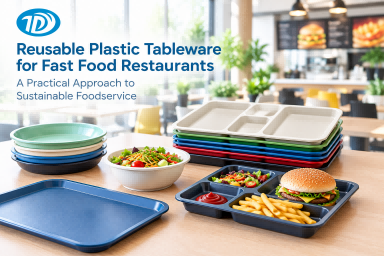
    Fast food restaurants, commercial kitchens, and institutional catering services need tableware that can handle frequent use, efficient cleaning, and high-volume food service. As the foodservice industry explores ways to reduce single-use waste, reusable plastic tableware has become a practical option for many commercial operations. For restaurant supply distributors, wholesalers, and foodservice procurement teams, choosing the right tableware means balancing durability, functionality, hygiene, and long-term operating needs. 1. Why Reusable Tableware Matters in Fast Food Fast food operations often serve large numbers of customers within a limited time. Disposable tableware may be convenient, but it can generate considerable waste when used for dine-in meals and other repeat-service applications. Reusable plastic tableware provides an alternative for suitable foodservice settings. Products designed for repeated use can help reduce reliance on single-use items when supported by appropriate washing, handling, and reuse procedures. 2. Key Benefits of Reusable Plastic Tableware Durable for Daily Commercial Use Commercial plastic trays, plates, and bowls are designed for repeated handling in busy foodservice environments. Material selection and product structure play important roles in determining service life and performance. Lightweight and Easy to Handle Compared with many heavier tableware alternatives, plastic products are lightweight and convenient for staff to carry, sort, and stack. This can be particularly useful in cafeterias, canteens, and high-volume dining facilities. Efficient Storage and Handling Stackable designs can help optimize storage space and simplify tableware collection and distribution. For large kitchens and foodservice operators, practical product dimensions and stacking compatibility are important purchasing considerations. Flexible Product Selection Reusable plastic tableware is available in different shapes, sizes, colors, and configurations. Compartment trays can separate different food items, while plates and bowls accommodate a variety of serving requirements. 3. Choosing the Right Tableware for Foodservice Operations Before purchasing reusable tableware in bulk, buyers should consider several factors: Material suitability: Select materials appropriate for the intended food-contact conditions, temperature range, cleaning methods, and applicable regulations. Product design: Consider compartment layout, tray dimensions, stacking performance, and ease of handling. Cleaning requirements: Confirm that the products are suitable for the intended washing and sanitation procedures. Supply consistency: For distributors and wholesalers, stable specifications, repeatable production, and reliable bulk supply are important for long-term purchasing. Customization options: Depending on the manufacturer, options may include product colors, dimensions, designs, and logo decoration. Selecting products based on actual operating requirements helps buyers build a tableware range that is practical for their customers. 4. Reusable Tableware for Different Foodservice Applications Reusable plastic tableware is used across a range of commercial foodservice settings. Fast food restaurants: Serving trays, plates, and bowls for dine-in service. School and workplace canteens: Compartment trays and reusable lunch boxes for organized meal distribution. Hotels and catering services: Commercial tableware for food preparation, serving, and meal delivery operations. Foodservice distributors: Multiple product styles and configurations for different customer segments. The appropriate product range depends on the serving process, cleaning facilities, and specific requirements of each operation. 5. Partnering with a Commercial Plastic Tableware Manufacturer For distributors, wholesalers, and foodservice suppliers, working directly with a manufacturer can make it easier to develop a consistent product range and plan bulk purchasing. Wuhu Pacific Plastic Co., Ltd. manufactures reusable plastic tableware and foodservice products, including commercial trays, compartment trays, plates, bowls, and lunch boxes. With in-house manufacturing capabilities and OEM/ODM services, we work with B2B customers on product specifications, colors, designs, and logo customization according to project requirements. Our goal is to provide practical tableware products for commercial foodservice operations while helping customers develop product ranges suited to their markets. Conclusion Reusable plastic tableware can be a practical choice for fast food restaurants, canteens, and other high-volume foodservice operations. With suitable product selection, effective cleaning procedures, and repeated use, it can help reduce dependence on single-use tableware. For distributors and wholesalers, choosing a manufacturer with a suitable product range, consistent specifications, and bulk production capabilities is an important step toward building a reliable foodservice tableware portfolio. Looking for a reusable plastic tableware manufacturer? Explore Pacific Plastic's commercial trays, compartment trays, plates, bowls, and lunch boxes to find products suited to your business requirements.
    Read More

  • Best Reusable Plastic Serving Trays for Commercial Foodservice: 2026 Buying Guide
    Best Reusable Plastic Serving Trays for Commercial Foodservice: 2026 Buying Guide
    Oct 10, 2026
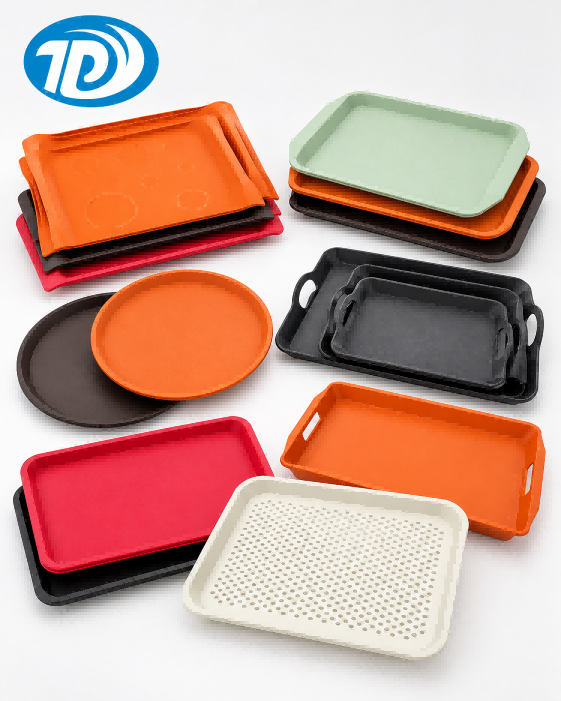
    Reusable plastic serving trays are essential for restaurants, hotels, cafeterias, and catering businesses. Choosing the right tray helps improve serving efficiency, reduce replacement costs, and support daily foodservice operations. For distributors and wholesale buyers, durability, material quality, practical design, and reliable manufacturing are key purchasing considerations. 1. What Makes a Good Reusable Plastic Serving Tray? The best commercial plastic serving trays should offer: Durability: Strong construction for repeated handling and daily use. Lightweight Design: Easy to carry, transport, and stack. Easy Cleaning: Smooth surfaces for convenient maintenance. Stackability: Space-saving storage and efficient handling. Material Quality: Suitable materials and food-contact compliance where required. 2. Best Types of Commercial Plastic Serving Trays Standard Rectangular Serving Trays Widely used in fast-food restaurants, cafeterias, and food courts. Their lightweight, stackable design makes them suitable for high-volume meal service. Non-Slip Serving Trays Designed with anti-slip surfaces to help keep plates, cups, and beverages stable during transportation. Ideal for restaurants, cafés, hotels, and catering operations. Round Serving Trays A practical option for beverage service, restaurants, and hospitality environments. Available in different sizes and surface designs. Serving Trays with Handles Integrated handles provide convenient gripping and handling, making these trays suitable for catering and institutional foodservice. 3. Which Plastic Material Is Best? Polypropylene (PP) is commonly used for reusable serving trays due to its lightweight construction, chemical resistance, durability, and cost efficiency. ABS Plastic offers good rigidity and surface appearance, making it suitable for selected tray designs and non-direct-food-contact applications. Material selection should depend on the tray's intended use, performance requirements, and applicable compliance standards. 4. What Should Wholesale Buyers Consider? When sourcing reusable plastic serving trays in bulk, several factors are important: Consistent Quality: Stable dimensions, materials, and surface finishes. Bulk Supply: Reliable production capacity and delivery schedules. Customization: Optional colors, sizes, surface patterns, and branding. Packaging Efficiency: Stackable designs to optimize shipping and storage. Manufacturer Capability: Injection molding experience, quality control, and OEM/ODM support. Working directly with a manufacturer can provide greater flexibility for product development and long-term supply. 5. Wholesale Reusable Plastic Serving Trays from Pacific Plastic Wuhu Pacific Plastic Co., Ltd. specializes in manufacturing commercial plastic tableware and reusable serving trays for global foodservice markets. Available solutions include standard serving trays, non-slip trays, round trays, and customized injection-molded products. Manufacturing capabilities include: Precision plastic injection molding OEM & ODM development Custom colors, sizes, and branding Quality inspection and production control Bulk supply for distributors and foodservice businesses Conclusion The best reusable plastic serving trays combine durability, practical design, easy maintenance, and cost efficiency. For restaurants, hotels, and wholesale distributors, selecting the right tray design and a reliable manufacturing partner is essential for long-term purchasing efficiency. Looking for commercial plastic serving trays in bulk? Contact Pacific Plastic for product catalogs, customization options, samples, and wholesale quotations. Email: ariana@ahpacificplastic.comWhatsApp: +86 190 5530 6841Website: https://www.ahpacificplastic.com/
    Read More
  • Where to Buy Durable Plastic-Coated Lunch Boxes for Commercial Foodservice
    Where to Buy Durable Plastic-Coated Lunch Boxes for Commercial Foodservice
    Oct 06, 2026
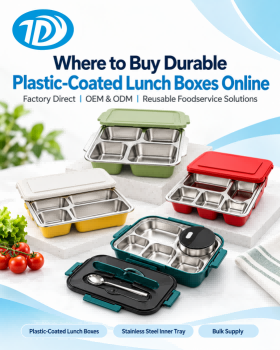
    For schools, canteens, hospitals, catering companies, and institutional foodservice operators, choosing a durable lunch box is not only about appearance. Material structure, food-contact safety, cleaning performance, insulation, and long-term durability all affect purchasing decisions. Plastic-coated lunch boxes are commonly used in commercial foodservice because they combine a durable outer plastic structure with a practical inner container, making them suitable for repeated daily use. What Is a Plastic-Coated Lunch Box? A plastic-coated lunch box generally combines a strong plastic outer shell with an inner food container made from PP or stainless steel. Compared with lightweight disposable containers, this structure provides better rigidity and is designed for repeated use in commercial environments. Depending on the model, the inner container can include: Food-grade PP inner trays 304 stainless steel inner containers Multiple compartments Removable inner sections Matching lids and outer shells This design is commonly used for business meals, school catering, institutional dining, staff canteens, and meal distribution. Why Choose Durable Plastic-Coated Lunch Boxes? 1. Suitable for Repeated Commercial Use Commercial foodservice requires lunch boxes that can withstand frequent handling, washing, stacking, and transportation. A reinforced plastic exterior helps protect the inner container and improves overall structural stability. 2. Different Inner Material Options Buyers can select different structures according to application requirements. PP inner containers offer a lightweight and practical solution for everyday foodservice applications. 304 stainless steel inner containers provide higher rigidity, good corrosion resistance, and a more premium appearance. 3. Compartment Options Multi-compartment designs help separate rice, vegetables, meat, side dishes, and other foods. Common configurations include: 2-compartment lunch boxes 3-compartment lunch boxes 4-compartment lunch boxes 5-compartment lunch boxes Different configurations allow distributors and catering operators to match products with different meal programs. Where Can You Buy Plastic-Coated Lunch Boxes? For small quantities, plastic-coated lunch boxes can be sourced through online marketplaces and restaurant supply websites. For wholesale purchasing, private-label programs, or customized specifications, sourcing directly from a manufacturer is generally more suitable. A direct manufacturer can provide greater flexibility in: Product dimensions Inner tray structure Material selection Colors Packaging Logo customization Laser marking OEM/ODM development Bulk production For distributors and commercial foodservice buyers, factory-direct sourcing also makes it easier to maintain consistent specifications for repeat orders. What Should B2B Buyers Check Before Purchasing? Before placing a bulk order, several factors should be reviewed. Material Confirm whether the food-contact components are made from suitable food-grade materials such as PP or 304 stainless steel. Food-Contact Compliance For international markets, suppliers should be able to provide relevant food-contact testing or compliance documentation according to the destination market. Product Structure Check the lid, inner container, outer shell, locking structure, compartment layout, and stacking performance. Production Capability For ongoing purchasing programs, production capacity and quality-control procedures are as important as the product itself. Customization Distributors and foodservice brands may require customized colors, logos, packaging, or product structures. A manufacturer with OEM and ODM capability can support these requirements more efficiently. Factory-Direct Plastic-Coated Lunch Boxes from Pacific Plastic Wuhu Pacific Plastic manufactures reusable commercial foodservice tableware for distributors, wholesalers, catering companies, institutional foodservice operators, and hospitality buyers. Available product solutions include: Plastic-coated stainless steel lunch boxes PP inner lunch boxes Multi-compartment lunch boxes Japanese-style business lunch boxes Stainless steel lunch boxes Serving trays Reusable bowls and plates Insulated food transport containers Production is supported by injection molding, assembly, laser marking, quality inspection, and OEM/ODM development capabilities. Food-contact products can be developed according to different market and project requirements, with compliance support covering standards such as FDA 21 CFR, EC 1935/2004, EU 10/2011, and REACH. Conclusion When purchasing durable plastic-coated lunch boxes for commercial foodservice, the best supplier depends on order quantity, material requirements, customization, and application. For small orders, online restaurant supply platforms may be sufficient. For wholesale distribution, institutional projects, or customized product programs, working directly with a manufacturer provides more flexibility in materials, structure, branding, packaging, and long-term supply. For buyers sourcing reusable plastic-coated lunch boxes in bulk, factory-direct purchasing can provide a more stable solution for commercial foodservice programs.
    Read More
  • Commercial Foodservice Tableware Buying Guide for Distributors and Wholesalers
    Commercial Foodservice Tableware Buying Guide for Distributors and Wholesalers
    Sep 30, 2026
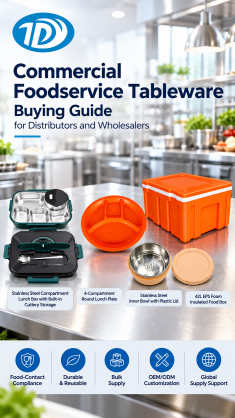
    For distributors and wholesalers, sourcing commercial foodservice tableware requires more than comparing unit prices. Material, durability, food-contact compliance, packaging efficiency, and supplier stability all affect long-term purchasing results. 1. Choose Products by Application Different foodservice environments require different products. Typical applications include: Restaurants and cafés Hotels Schools and corporate canteens Hospitals Central kitchens Catering and meal delivery Common product categories include serving trays, compartment lunch boxes, reusable bowls and plates, stainless steel tableware, and insulated food transport containers. 2. Select the Right Material Material choice directly affects durability, weight, temperature resistance, and cost. PP is widely used for serving trays, lunch boxes, bowls, and plates due to its lightweight structure and chemical resistance. ABS offers good rigidity and surface appearance and is often used for selected commercial trays and structural parts. PC is known for impact resistance and transparency and is commonly used for reusable drinkware. 304 stainless steel is suitable for high-frequency institutional and commercial meal service. For insulated food transport, EPP, EPS, and PU are commonly used to provide thermal insulation. 3. Check Durability and Compliance Commercial tableware must withstand repeated washing, stacking, handling, and daily use. Important factors include: Impact resistance Rim and corner strength Stackability Surface durability Lid and handle strength Food-contact compliance should also match the target market. Common standards may include: FDA 21 CFR EC 1935/2004 EU 10/2011 REACH SVHC Factory systems such as ISO 9001, ISO 22000, and HACCP can also help buyers evaluate production and quality-control capability. 4. Consider Packaging and Logistics For bulk purchasing, carton size and packing efficiency can significantly affect freight costs. Before ordering, distributors should review: Pieces per carton Carton dimensions Gross weight Stackability Container loading quantity A well-designed stackable product can reduce storage and shipping costs. 5. Review Customization Capability Wholesalers may require different colors, logos, packaging, or private-label solutions. Common customization options include: Custom colors Logo printing Laser marking Private label Packaging customization Mold development OEM/ODM support MOQ, tooling cost, lead time, and projected annual volume should be confirmed before starting customized projects. 6. Evaluate the Supplier A reliable supplier should support stable repeat production and consistent product quality. Key points to review include: Production equipment Raw material control Quality inspection Mold management Warehousing Traceability Export experience A video factory tour can also help buyers verify production capability before larger orders. Pacific Plastic Commercial Tableware Supply Pacific Plastic supplies reusable commercial foodservice tableware and insulated food transport products for B2B customers. Main categories include: Commercial serving trays 2/3/4/5-compartment lunch boxes Reusable bowls and plates 304 stainless steel compartment plates Stainless steel lunch boxes Insulated buckets EPP insulated food boxes Wholesale supply, private label, OEM/ODM, and customized product development are available for distributors, importers, and foodservice suppliers. Conclusion For distributors and wholesalers, the best sourcing decision should balance product quality, compliance, logistics efficiency, customization capability, and long-term supply stability. Reviewing samples, specifications, compliance documents, packaging data, and factory capability before bulk purchasing can help reduce procurement risks and improve long-term 
    Read More
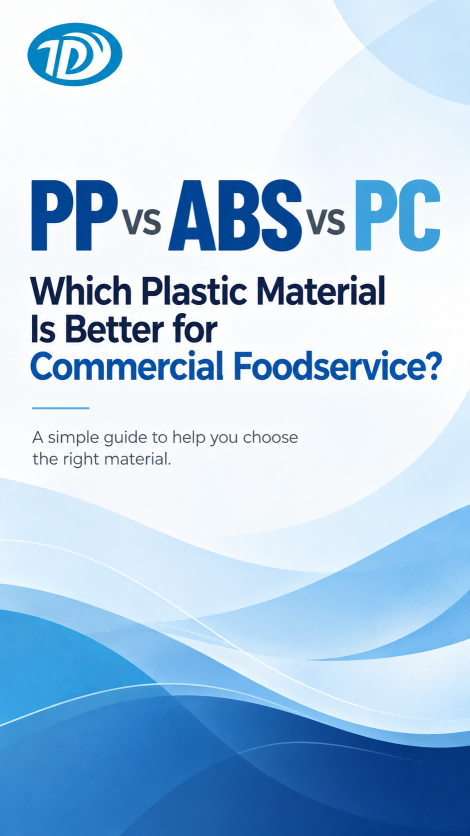
  • PP vs ABS vs PC: Which Plastic Material Is Better for Commercial Foodservice?
    PP vs ABS vs PC: Which Plastic Material Is Better for Commercial Foodservice?
    Sep 27, 2026
    Choosing the right plastic material is important for commercial tableware. PP, ABS, and PC are commonly used materials, but each has different properties and applications. PP – Practical for Reusable Tableware PP (Polypropylene) is lightweight, moisture resistant, and suitable for repeated use. Common applications include: Serving trays Plates and bowls Compartment lunch boxes Food containers PP is widely used in schools, hospitals, cafeterias, restaurants, and institutional foodservice. ABS – Strong and Rigid ABS offers good rigidity, impact resistance, and surface appearance. It is commonly used for: Commercial serving trays Outer housings Handles Structural plastic parts ABS is suitable for products requiring stronger structure and dimensional stability. PC – Transparent and Impact Resistant PC (Polycarbonate) combines transparency with high impact resistance. Typical applications include: Reusable cups Drinkware Transparent containers Selected foodservice products It is often selected when product visibility and durability are important. PP vs ABS vs PC Material Main Features Typical Applications PP Lightweight, practical, reusable Lunch boxes, bowls, plates, trays ABS Rigid, durable, good appearance Serving trays, structural parts PC Transparent, strong, impact resistant Cups, drinkware, containers How to Choose Material selection should consider: Food-contact requirements Operating temperature Impact resistance Product weight Cleaning conditions Product structure Cost For example, PP is commonly used for reusable lunch boxes and tableware, while ABS and PC are selected according to specific structural or appearance requirements. OEM/ODM Material Support Pacific Plastic supports material selection and customized product development for commercial foodservice applications, including: PP tableware Serving trays Compartment lunch boxes Reusable bowls and plates Customized plastic products Support covers material selection, structure design, color, logo customization, mold development, and mass production. Conclusion PP, ABS, and PC each have different advantages. The best material depends on the actual foodservice application, temperature, durability, structure, and food-contact requirements. Proper material selection helps improve product performance and long-term usability in commercial foodservice environments.
    Read More
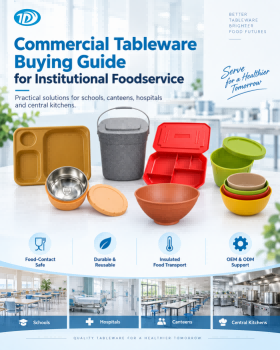
  • Commercial Tableware Buying Guide for Institutional Foodservice
    Commercial Tableware Buying Guide for Institutional Foodservice
    Sep 22, 2026
    Institutional foodservice requires tableware that can handle frequent use, large meal volumes, repeated cleaning, and standardized meal distribution. Schools, hospitals, corporate canteens, factories, central kitchens, and catering operations usually need products with stable materials, practical structures, and reliable bulk supply. 1. Choose the Right Material Different materials are suitable for different applications. PP tableware is lightweight, reusable, and widely used for serving trays, compartment lunch boxes, bowls, and plates. 304 stainless steel products offer strong durability and are suitable for canteens, hospitals, schools, and other high-frequency foodservice environments. For hot meal transportation, insulated structures such as EPP, EPS, and PU can help reduce heat loss during distribution. Pacific Plastic supplies a range of products including: PP serving trays 2/3/4/5-compartment lunch boxes 304 stainless steel lunch plates and lunch boxes Plastic-coated stainless steel lunch boxes Bowls and plates Insulated food boxes and buckets 2. Match the Product to the Application Different institutions require different tableware configurations. Schools and Canteens Compartment lunch boxes are commonly used for portion control and standardized meal service. Pacific Plastic offers 2-, 3-, 4-, and 5-compartment lunch boxes, suitable for school meals, factory canteens, and institutional dining. Reusable PP serving trays can also support cafeteria-style meal service. Hospitals and Institutional Catering Meal distribution often requires products that are easy to handle, clean, and repeatedly use. Stainless steel lunch plates, compartment lunch boxes, bowls, and serving trays can be selected according to different meal delivery systems. Central Kitchens Central kitchens usually require both tableware and food transport solutions. Products such as insulated food boxes, insulated buckets, rice boxes, and soup containers can support bulk meal distribution between production kitchens and serving locations. Pacific Plastic currently provides multiple insulated container capacities, including solutions for soup, rice, prepared meals, and large-scale catering transport. 3. Focus on Durability and Reuse Institutional tableware is often used several times per day. Important purchasing factors include: Impact resistance Repeated washing performance Stackability Easy handling Stable structure Long service life For large-scale foodservice operations, reusable products can help simplify daily replacement and inventory management. 4. Select Suitable Sizes and Compartments Compartment design should match meal structure and portion requirements. For example: 2-compartment lunch boxes for simple meal combinations 3-compartment lunch boxes for staple food, main dish, and side dish 4- and 5-compartment lunch boxes for more standardized meal distribution Serving tray size should also match cafeteria counters, dishwashing equipment, storage racks, and transport systems. For hot meal delivery, insulated containers should be selected according to food type and transport volume. 5. Consider Food Transport Requirements Institutional foodservice often involves more than serving meals at one location. Central kitchens, school meal programs, hospitals, and catering companies may need to transport prepared food over short or medium distances. Pacific Plastic supplies: EPP insulated food boxes Round insulated buckets Rice transport boxes Soup containers Large-capacity insulated food containers These products are designed for reusable commercial food transportation and can be combined with tableware systems for complete meal distribution. 6. Check Food-Contact Compliance Commercial buyers should confirm that tableware meets the applicable food-contact requirements in the target market. Pacific Plastic supports foodservice projects with relevant quality and compliance systems, including: ISO 9001 ISO 22000:2018 HACCP FDA 21 CFR EC 1935/2004 EU 10/2011 REACH SVHC Material traceability and inspection processes should also be considered during supplier evaluation. 7. Evaluate the Manufacturer For bulk procurement, buyers should consider more than product price. A suitable manufacturer should be able to support: Stable bulk production OEM and ODM development Custom colors Logo customization Mold development Different sizes and structures Quality inspection Long-term supply Pacific Plastic manufactures reusable commercial tableware and insulated food transport products for foodservice distributors, catering companies, institutions, and OEM projects. Choosing the Right Commercial Tableware The right institutional tableware depends on the meal type, serving method, daily volume, cleaning system, storage space, and transport requirements. A complete solution may include serving trays, compartment lunch boxes, stainless steel products, bowls, plates, and insulated food transport containers rather than a single product.   For schools, hospitals, canteens, central kitchens, and institutional catering projects, selecting compatible products from one manufacturing system can help simplify procurement and product standardization.
    Read More
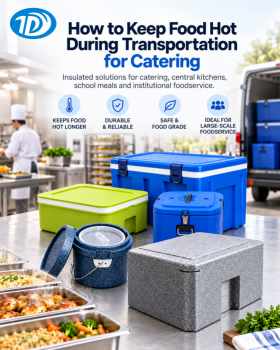
  • How to Keep Food Hot During Transportation for Catering?
    How to Keep Food Hot During Transportation for Catering?
    Sep 17, 2026
    Keeping food hot during transportation is an important part of catering, central kitchen distribution, school meals, and institutional foodservice. The right transport method can help reduce heat loss and improve delivery efficiency. 1. Use Insulated Food Containers Insulated food containers are one of the most practical solutions for transporting hot meals. Common options include: EPP insulated food boxes Insulated food buckets EPS insulated containers PU insulated food containers Different structures are suitable for different food types, transport distances, and operating environments. 2. Preheat the Container Before loading hot food, the container can be preheated with warm or hot water. This helps reduce the temperature difference between the food and the container, limiting heat loss during the first stage of transportation. The container should be emptied and dried before food is loaded. 3. Load Food Quickly After Cooking Hot food should be packed as soon as possible after preparation. Long waiting times between cooking and loading can result in unnecessary temperature loss, especially in central kitchens and large-scale catering operations. Efficient coordination between cooking, packing, loading, and delivery is therefore important. 4. Keep the Container Closed Frequent opening allows heat to escape. During transportation, insulated containers should remain closed as much as possible. Different dishes can also be packed separately to reduce repeated opening during delivery. 5. Choose the Right Capacity Container size also affects transport efficiency. Smaller insulated buckets are suitable for soup, sauces, and side dishes, while larger insulated boxes can be used for bulk meals, rice, or central kitchen distribution. Choosing the correct capacity can improve loading efficiency and help reduce unnecessary empty space inside the container. Choosing a Container for Commercial Catering For commercial food transportation, buyers should consider: Insulation structure Capacity Food-contact material Lid design Stackability Carrying handles Cleaning requirements Reusable durability The best option depends on the food type, delivery distance, transport volume, and application. Pacific Plastic manufactures reusable insulated food containers, food boxes, and insulated buckets for catering, central kitchens, hotels, schools, canteens, and institutional foodservice. OEM and ODM options are available for different commercial and project requirements.
    Read More

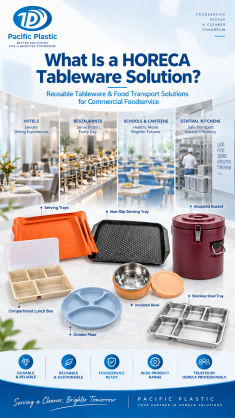
  • What Is a HORECA Tableware Solution?
    What Is a HORECA Tableware Solution?
    Sep 15, 2026
    HORECA tableware solutions are designed for hotels, restaurants, cafés, catering companies, canteens, central kitchens, and institutional foodservice. Unlike household tableware, commercial products need to support frequent use, repeated cleaning, food serving, storage, and transportation. What Products Are Included? A complete HORECA tableware solution may include: Serving trays Non-slip trays Compartment lunch boxes Plates and bowls Stainless steel tableware Insulated food boxes and buckets Different products are selected according to the application. Hotel and Restaurant Solutions Hotels and restaurants may use serving trays, buffet tableware, plates, bowls, and stainless steel products for dining, buffet, room service, and café applications. Key requirements include durability, easy cleaning, stackability, and consistent appearance. School and Canteen Solutions Compartment lunch boxes are widely used in schools, company canteens, hospitals, and institutional catering. Common options include 2-, 3-, 4-, and 5-compartment lunch boxes, helping organize different foods and improve meal distribution efficiency. Central Kitchen and Catering Solutions Central kitchens and catering companies often require insulated food containers for transporting: Rice Soup Prepared meals Hot dishes Cold food EPP, EPS, and PU insulation structures help reduce temperature change during temporary storage and transportation. How to Choose HORECA Tableware Commercial buyers should consider: Material Durability Food-contact compliance Easy cleaning Stackability Product consistency OEM and ODM options PP, stainless steel, and EPP are commonly used for different HORECA applications. OEM & ODM HORECA Solutions Customized solutions may include: Custom colors Logo printing or laser marking Packaging customization Product development Mold development These services are suitable for distributors, hotel groups, restaurant chains, catering companies, and institutional buyers. HORECA Tableware Manufacturer Pacific Plastic supplies reusable tableware and insulated food transport products for commercial foodservice applications. Main categories include serving trays, compartment lunch boxes, plates, bowls, stainless steel tableware, and insulated food containers. OEM and ODM services are available for bulk and project orders.
    Read More
  • Pacific Plastic at Moscow Exhibition 2026
    Pacific Plastic at Moscow Exhibition 2026
    Sep 14, 2026
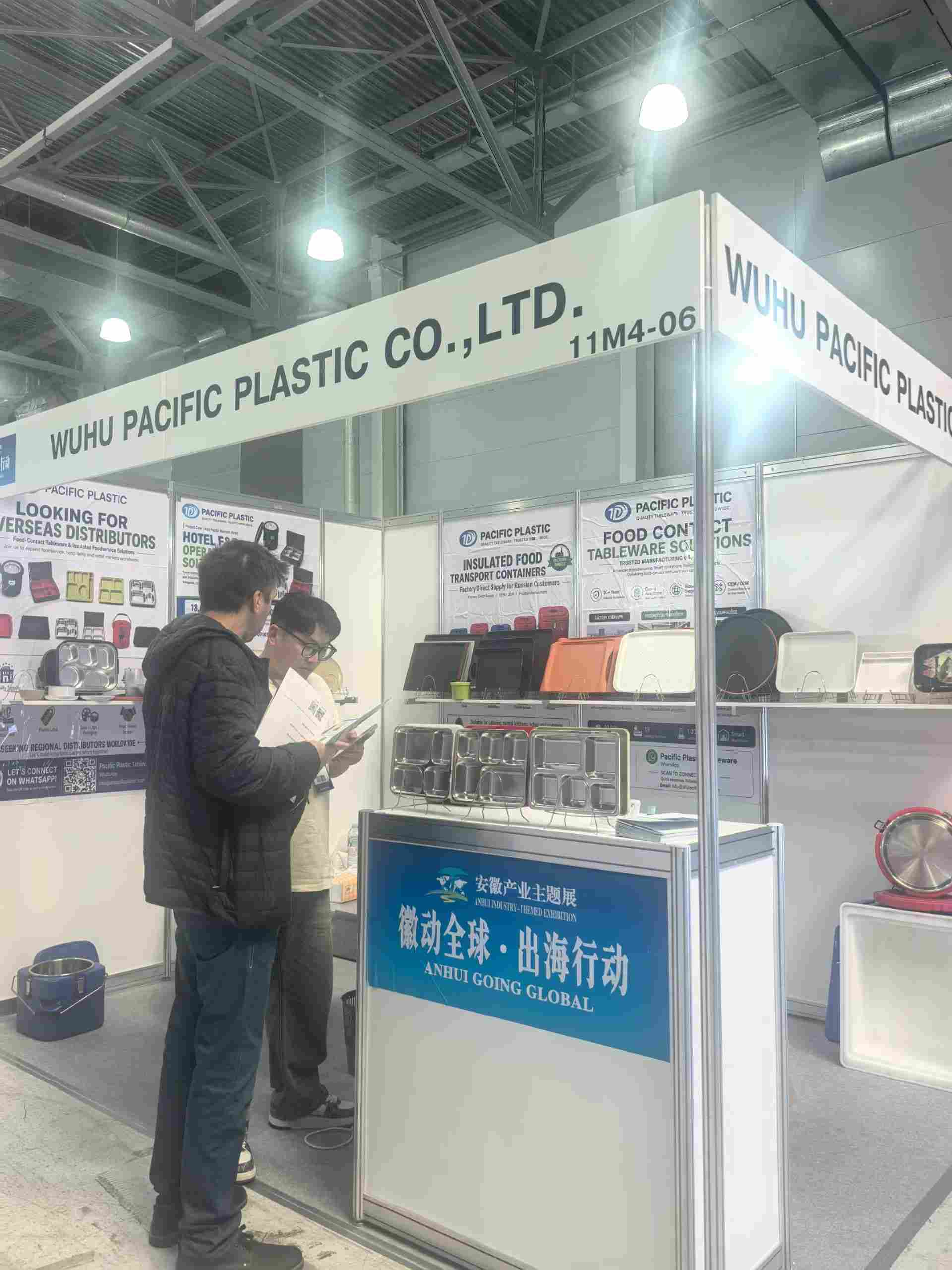
    In September 2026, Wuhu Pacific Plastic Co., Ltd. participated in a professional trade exhibition in Moscow, Russia, showcasing a range of commercial food-contact tableware and insulated food transportation solutions. The exhibition gave us a valuable opportunity to meet local distributors, wholesalers, catering suppliers, and other foodservice professionals face to face. Products Showcased At the booth, Pacific Plastic presented several key product categories, including: Insulated food containers and buckets Commercial serving trays Non-slip trays Compartment lunch boxes Stainless steel lunch boxes Plastic-coated stainless steel lunch boxes These products are suitable for restaurants, hotels, cafeterias, canteens, central kitchens, catering companies, institutional dining, and food delivery operations. Focus on Commercial Foodservice Applications During the exhibition, many visitors were interested in product durability, insulation performance, compartment design, customization, and food-contact compliance. For commercial users, products need to be more than functional. They also need to be reusable, easy to clean, stable in daily operation, and suitable for repeated use. Pacific Plastic supports different materials and structures, including PP, PE, EPP, stainless steel components, and insulated designs, depending on the application. Meeting Russian Distributors and Buyers The exhibition provided an important chance to communicate directly with Russian customers and better understand local market needs. Discussions covered: Product specifications Customized colors Logo and laser marking Packaging requirements OEM/ODM development Bulk purchasing Distribution cooperation Direct communication at the exhibition helped both sides better understand project requirements and possible cooperation models. Expanding Cooperation in Russia As a China-based manufacturer, Pacific Plastic continues to develop cooperation with foodservice distributors, hotel suppliers, catering equipment companies, wholesalers, and OEM/ODM buyers. The Moscow exhibition was another step in expanding our presence in the Russian market and building closer relationships with local partners.   Pacific Plastic will continue providing commercial tableware, serving products, lunch boxes, and insulated food transportation solutions for international B2B customers.
    Read More
  • How to Choose a Compartment Lunch Box for Schools and Canteens
    How to Choose a Compartment Lunch Box for Schools and Canteens
    Sep 10, 2026
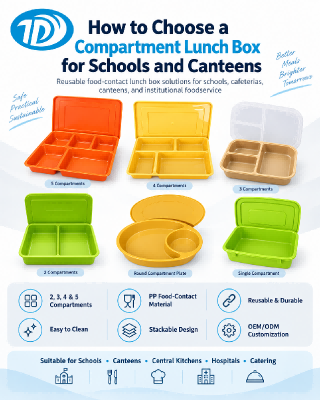
    Compartment lunch boxes are widely used in schools, cafeterias, canteens, hospitals, central kitchens, and institutional foodservice. Their divided structure helps separate rice, vegetables, meat, fruit, and side dishes in one container. For commercial use, compartment lunch boxes also need to be durable, reusable, easy to clean, stackable, and suitable for repeated daily use. Common Compartment Lunch Box Designs 2-Compartment Lunch Box A 2-compartment lunch box is suitable for simple meal combinations. Common uses include: · Rice and main dish· Main dish and side dish· Pasta and vegetables· Simple school meals The larger sections make portioning easy and practical. 3-Compartment Lunch Box A 3-compartment design is suitable for meals that need basic food separation. Typical combinations include: · Rice· Meat or protein· Vegetables It is commonly used in schools, cafeterias, and staff canteens. 4-Compartment Lunch Box A 4-compartment lunch box provides more flexibility for balanced meals. It can be used for: · Staple food· Meat· Vegetables· Fruit or side dishes This design is suitable for standardized meal service. 5-Compartment Lunch Box A 5-compartment lunch box is suitable for meals with more food categories. It helps separate: · Rice or pasta· Main dish· Vegetables· Fruit· Side dishes or sauce It is commonly used for school meals, institutional catering, and canteen service. What to Consider When Choosing a Compartment Lunch Box Commercial buyers should consider: · Number of compartments· Compartment capacity· Overall size· PP material· Durability· Stackability· Cleaning efficiency· Lid design· Food-contact requirements The right design should match the actual meal portion and foodservice process. Pacific Plastic Compartment Lunch Box Solutions Pacific Plastic manufactures reusable compartment lunch boxes for B2B foodservice customers. Available options include: · 2-compartment lunch boxes· 3-compartment lunch boxes· 4-compartment lunch boxes· 5-compartment lunch boxes· Lunch boxes with lids· Customized compartment lunch boxes OEM/ODM customization is available for different sizes, colors, compartment layouts, logos, packaging, and application requirements. Conclusion Compartment lunch boxes provide a practical solution for organized meal serving in schools and canteens. Different compartment layouts can be selected according to meal structure, portion size, cleaning requirements, and daily operating conditions. Pacific Plastic supports bulk orders and customized compartment lunch box projects for schools, canteens, distributors, catering suppliers, and institutional foodservice customers.
    Read More
  • Commercial Insulated Food Boxes and Buckets from Pacific Plastic
    Commercial Insulated Food Boxes and Buckets from Pacific Plastic
    Sep 08, 2026
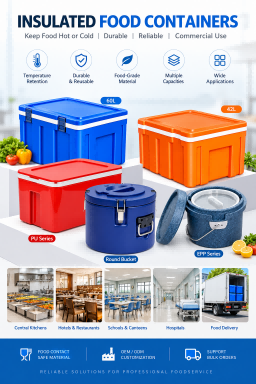
    Insulated food boxes and buckets are widely used in central kitchens, restaurants, hotels, cafeterias, canteens, catering operations, and food delivery services. Their insulated structure helps slow down temperature changes during food storage and transportation. For commercial use, insulated containers also need to be durable, reusable, easy to clean, convenient to carry, and suitable for repeated daily use. Main Uses of Insulated Food Boxes and Buckets Hot Food Transportation Insulated food containers are suitable for transporting: · Rice· Soup· Prepared meals· Cooked dishes· Hot beverages· Bulk food The insulated structure helps reduce heat loss during transportation. Cold Food Storage and Delivery Insulated boxes can also be used for temporary cold food transportation. Common applications include: · Cold dishes· Ingredients· Packaged food· Beverages· Catering supplies EPP and other insulation materials help reduce temperature exchange with the surrounding environment. Central Kitchens and Catering Commercial insulated food boxes and buckets are commonly used for: · Central kitchens· Hotels· Restaurants· Schools· Hospitals· Factory canteens· Catering companies· Institutional foodservice Different capacities can be selected according to food volume and transportation requirements. Common Insulation Materials EPP Insulated Food Boxes EPP insulated boxes are lightweight, reusable, and impact resistant. They are suitable for frequent food transportation and commercial catering operations. Common capacities include: · 16L· 23L· 48L· 60L EPS Insulated Containers EPS provides lightweight and economical thermal insulation. It is commonly used where basic temperature protection and cost control are important. PU Insulated Food Boxes PU polyurethane foam is widely used in heavy-duty insulated food transport containers. The PU insulation layer is placed between the inner and outer shell to help reduce heat transfer. PU insulated boxes are suitable for: · Hot meal transportation· Rice transportation· Catering distribution· Central kitchen logistics· Large-volume food delivery Common capacities include 45L, 50L, 60L, and 69L. Pacific Plastic Insulated Food Container Solutions Pacific Plastic manufactures commercial insulated food boxes and insulated buckets for B2B foodservice customers. Available options include: · EPP insulated boxes· Insulated food buckets· PU foam insulated food boxes· Insulated rice containers· Hot food transport boxes· Large-capacity insulated containers· Custom insulated food containers OEM/ODM customization is available for different capacities, colors, structures, logos, packaging, and application requirements. Conclusion Commercial insulated food boxes and buckets provide a practical solution for maintaining food temperature during storage and transportation. EPP, EPS, and PU insulation structures can be selected according to different requirements for weight, durability, capacity, insulation performance, and commercial use. Pacific Plastic supports bulk orders and customized insulated food container projects for distributors, central kitchens, hotels, restaurants, catering companies, and foodservice suppliers.
    Read More
  • Affordable Non-Slip Serving Trays from Pacific Plastic
    Affordable Non-Slip Serving Trays from Pacific Plastic
    Sep 03, 2026
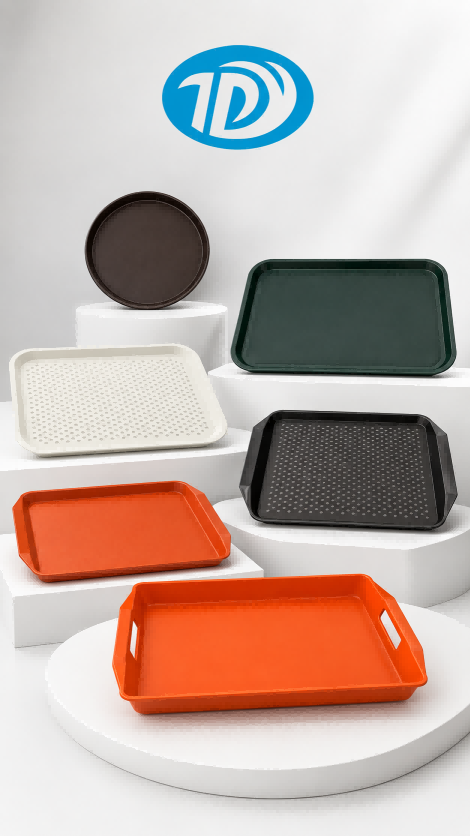
    Non-slip serving trays are widely used in hotels, restaurants, cafeterias, canteens, and catering operations. Their anti-slip surface helps keep plates, cups, glasses, and bowls more stable during serving. For commercial use, trays also need to be durable, easy to clean, stackable, and suitable for repeated daily use. Main Uses of Non-Slip Serving Trays Food and Drink Service Non-slip trays are suitable for carrying: · Plates and bowls· Cups and glasses· Drinks· Cutlery· Room service meals The textured surface helps reduce movement while staff are carrying the tray. Hotels and Restaurants Non-slip trays are commonly used for restaurant service, hotel room service, cafés, bars, and catering. They provide better stability when carrying several items at the same time. Reusable Commercial Use Reusable plastic serving trays are lightweight, easy to handle, and practical for frequent daily use. Common applications include: · Hotels· Restaurants· Cafeterias· Hospitals· Schools· Catering services Pacific Plastic Serving Tray Solutions Pacific Plastic manufactures commercial serving trays for B2B foodservice customers. Available options include: · Non-slip serving trays· Hotel serving trays· Restaurant serving trays· Round serving trays· Trays with handles· Custom plastic trays OEM/ODM customization is available for different sizes, colors, logos, surface designs, and packaging requirements. Conclusion Affordable non-slip serving trays provide a practical solution for carrying food and drinks more securely in commercial foodservice environments. Pacific Plastic supports bulk orders and customized serving tray projects for distributors, hotels, restaurants, and foodservice suppliers.
    Read More

leave a message

leave a message
If you are interested in our products and want to know more details,please leave a message here,we will reply you as soon as we can.
Contact us:ariana@ahpacificplastic.com

Home

Products

WhatsApp

contact